L THE LIKENESSScreenplay Slate • 13 Films
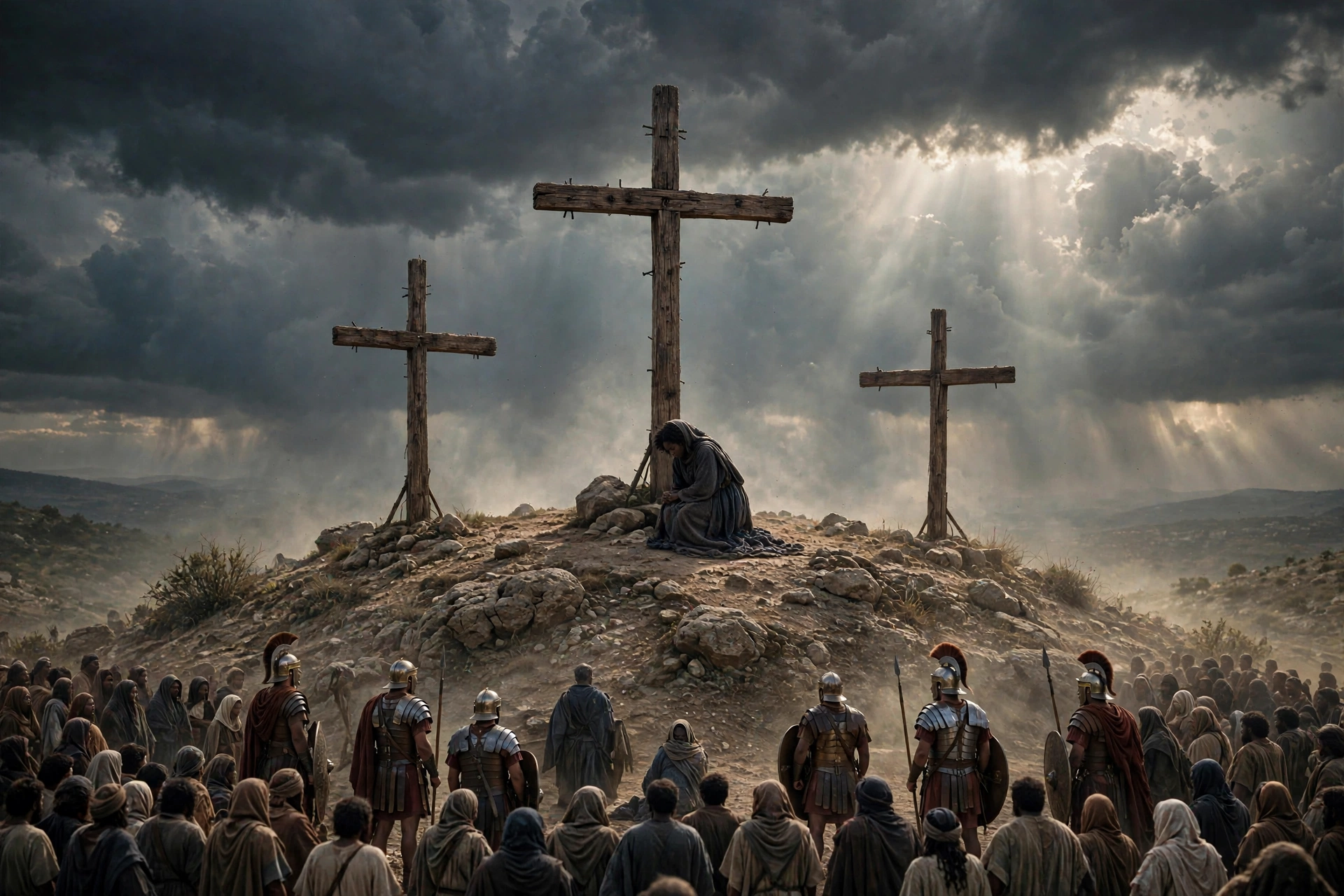
Three crosses on Golgotha under storm clouds — keyframe artwork from The Likeness
An unproduced screenplay slate • Flagship-first

CRUCIFIXION:THE LIKENESS

Drawn from the Holy Quran and supporting traditions.

On the night of his betrayal, heaven casts the face of the Messiah onto Judas Iscariot — and the betrayer is crucified in his place, while the disciples must carry a truth the world will never believe.

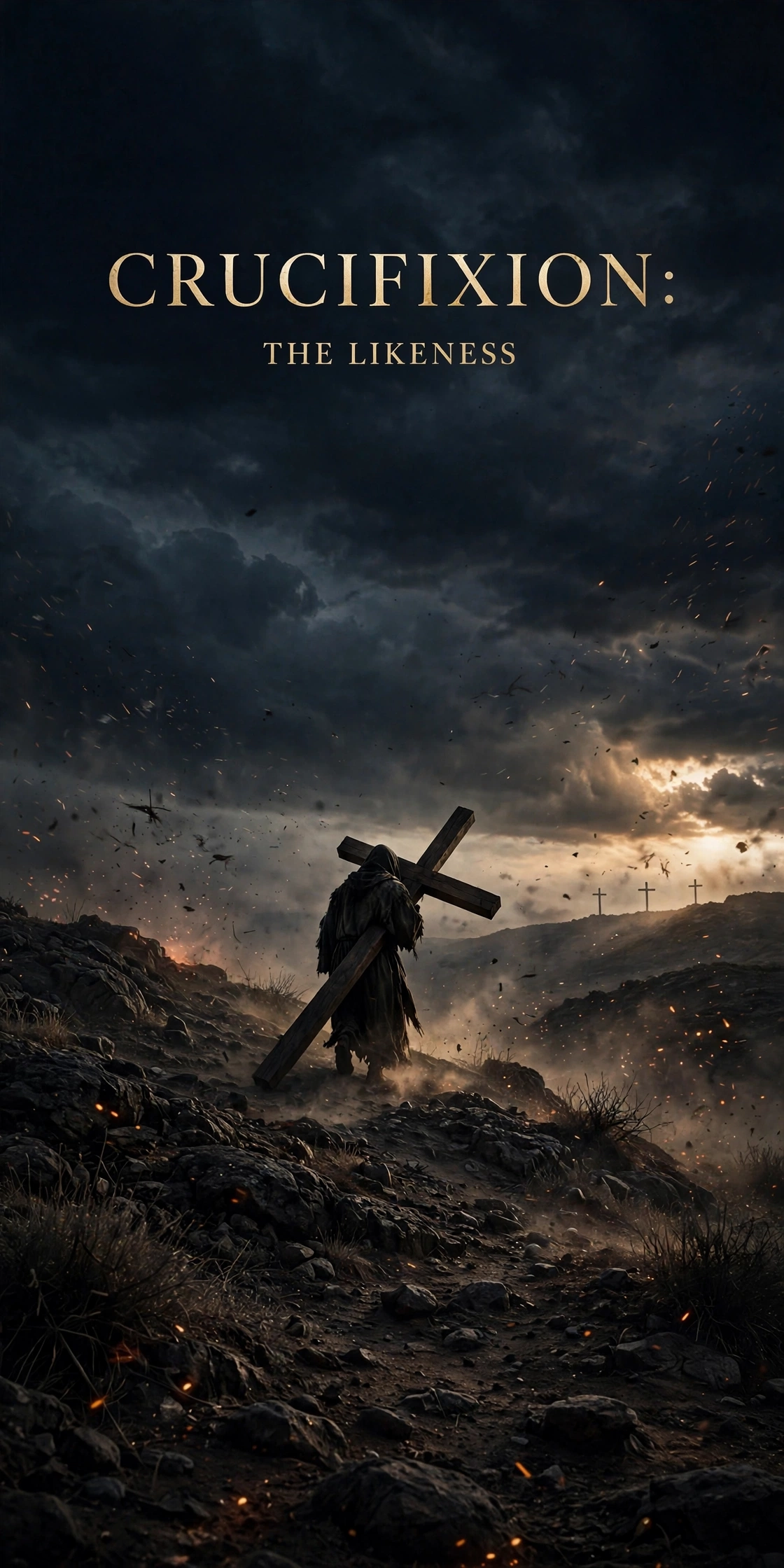
Poster for Crucifixion: The Likeness — a lone figure carrying a cross toward three crosses on a hill under a storm-dark sky
Official Poster • Flagship Film
13Screenplays
1,154Total pages
101 pp • 141Flagship • Scenes
42Chapters — Novelization

Unproduced screenplays • Not a released film • Written for an all-Black cast

Full poster artwork for Crucifixion: The Likeness
Flagship Poster

The center the other twelve films circle. One event, told from every side of the hill — and from inside the garden where it was decided.

Why this slate is different

Twelve films circling
a single event.

Most slates are sequels. This one is a constellation. Each screenplay stands alone — and together they assemble one weekend from the palace, the council chamber, the road, the next cross, and the tomb.

THE CENTER

The Likeness contains the whole argument by itself: the child, the prophet, the substitution, the truth.

THE EDGES

Claudia through a lattice. Simon from under the beam. The Thief from the next cross. The Dissent from the chamber.

THE AFTERLIFE

From Barnabas's scrolls to a codex in Córdoba to a scholar in Istanbul — what it costs to carry the story.

Surah An-Nisa 4:157

“They did not kill him,
nor did they crucify him.”

The line the entire slate dramatizes — as the testimony of its sources.

From the film

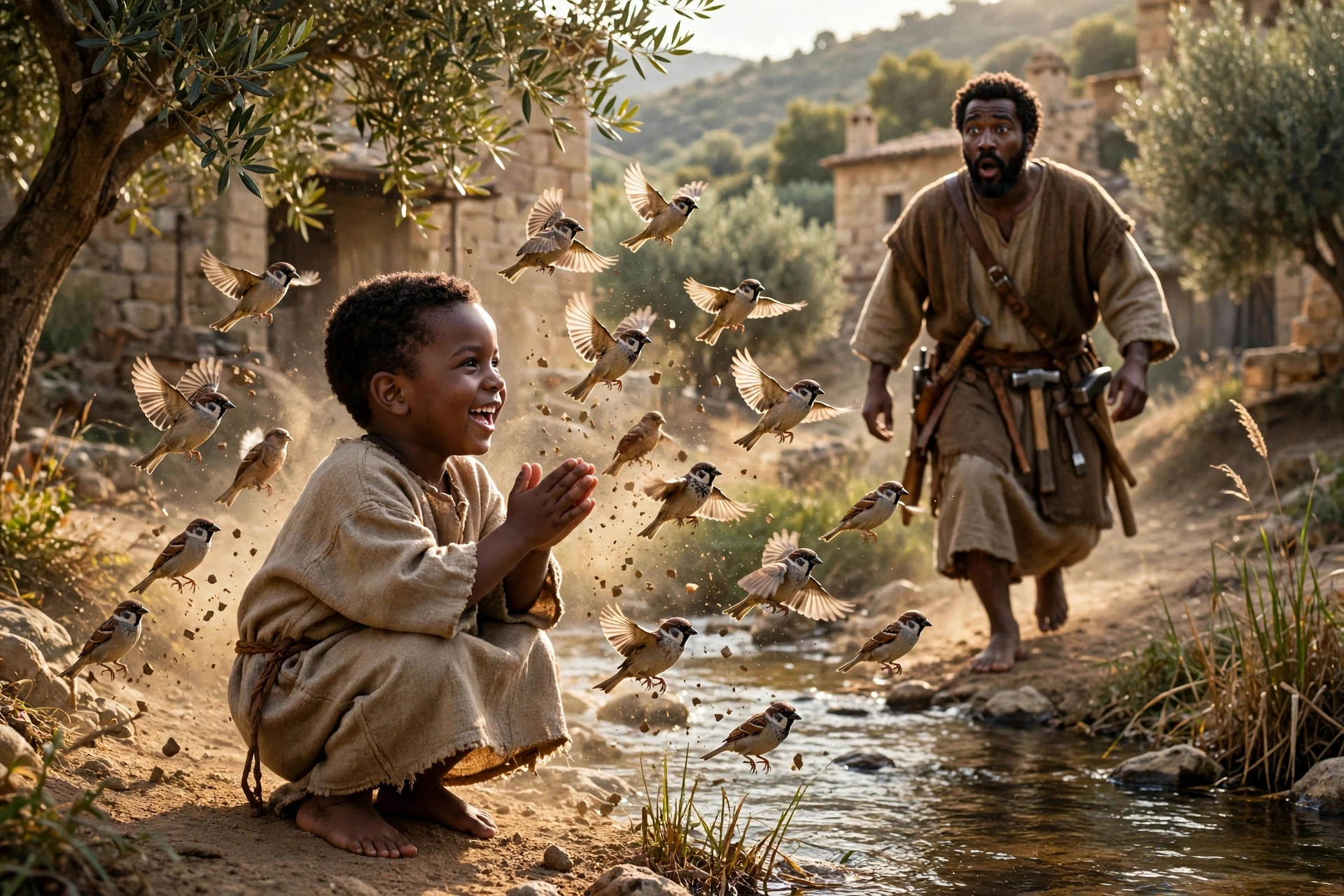
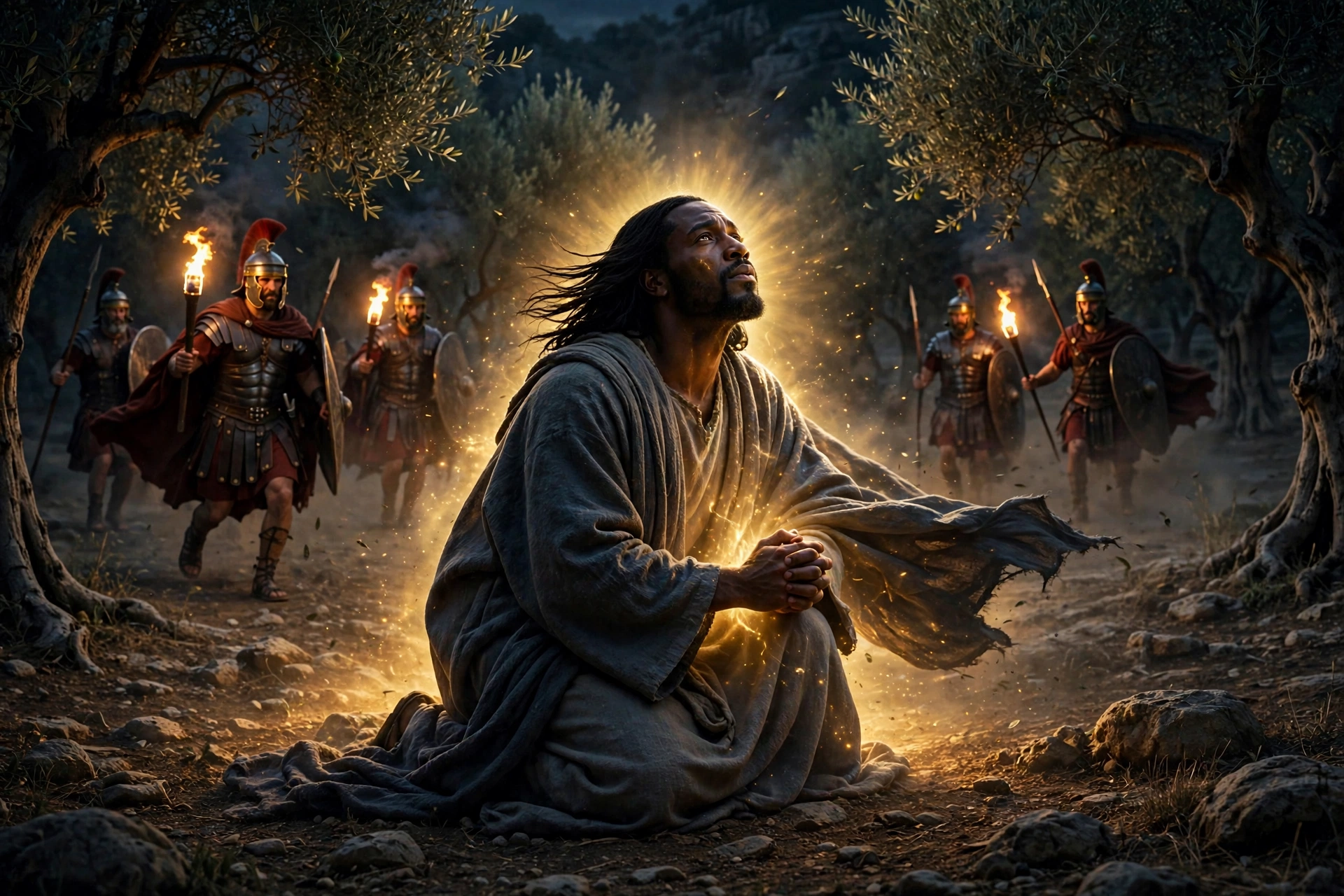
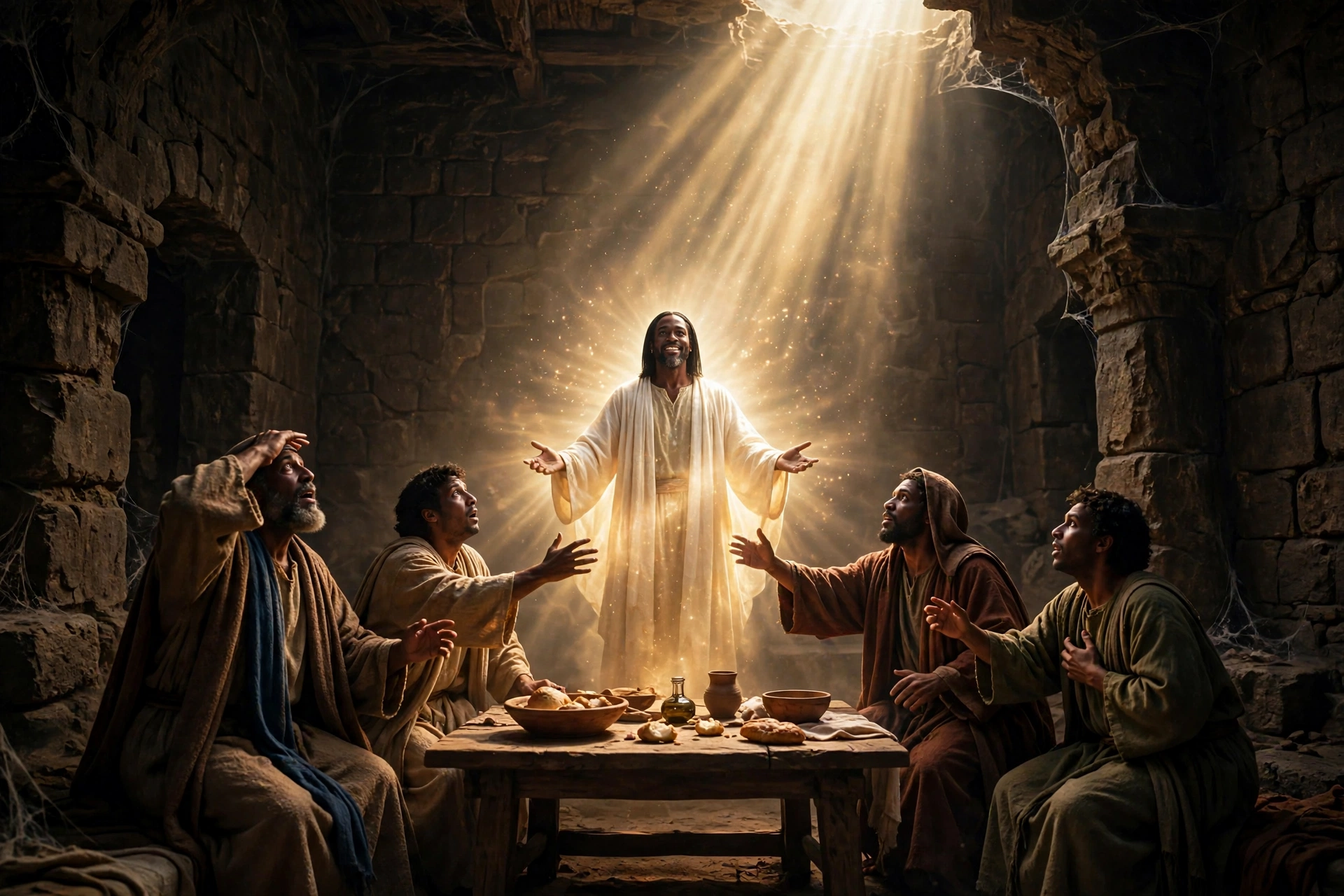
Four keyframes

Young Isa by a stream as clay sparrows take flight
The Clay Sparrows • Act One
In the garden at night, golden light surrounds a kneeling figure as soldiers approach with torches
The Garden • Act Three
Three empty crosses on Golgotha under storm clouds, a mourner kneeling at the center cross
Golgotha • The Weekend
A radiant figure appears to disciples gathered around a table in a stone upper room
The Upper Room • Act Four

Start with the flagship

Flagship-first, by design.

The Likeness leads. Then: The Baptist → Judas → Maryam as the hinge → the Weekend films → the Aftermath → The Codex and The Translator as the long coda.

01 • The Flagship • 101 pages • 141 scenes

CRUCIFIXION: THE LIKENESS

Written by Yannick Rolle. Drawn from the Holy Quran and supporting traditions.

Unproduced screenplayMythic epicAll-Black cast — as writtenNo runtime stated

Synopsis

A mythic epic woven from three sources. From the Holy Quran: the virgin birth beneath the palm, the infant who speaks from the cradle, the miracles worked by Allah's leave, the Table sent down from heaven, and the promise — they did not kill him, nor did they crucify him. From the Gospel of Barnabas: the baptism, the foretelling of the messenger to come, and the night when four angels bore Jesus up while Judas was remade in his likeness. From the Infancy Gospel of Thomas: the childhood wonders of Nazareth — the clay sparrows, the withered boy, the teacher confounded. Framed by a present-day scholar translating an early Quranic codex, the film tells the whole arc: the child, the prophet, the likeness, and the truth.


“On the night of his betrayal, heaven casts the face of the Messiah onto Judas Iscariot — and the betrayer is crucified in his place.”

Screenplay facts

TitleCRUCIFIXION: THE LIKENESS
WriterYannick Rolle
Length101 pages
Scenes141 scenes
StatusUnproduced screenplay
Opening cardDRAWN FROM THE HOLY QURAN
AND SUPPORTING TRADITIONS
Also42-chapter novelization
“The Likeness”
Poster for Crucifixion: The Likeness
A note on honesty

This is a screenplay slate seeking representation and production partners. It is not presented as a released or in-production film, and no studio or agent credits are claimed.

The four acts

Tap an act to follow the arc. The structure mirrors the synopsis: childhood wonders, public ministry, the substitution in the garden, and the truth the disciples must carry.

Keyframes

Project artwork. Click any frame to enlarge.

02 • The Complete Slate • Flagship-first release order

13 films. 1,154 pages.
One event.

Every title below is a completed screenplay by Yannick Rolle, listed in the intended release order. Search, filter by movement, and tap a card for its logline in full.

Total: 13 screenplays • 1,154 pages

Plus the 42-chapter novelization, The Likeness.

03 • Testimony, not assertion

The Sources

The film dramatizes the substitution as the testimony of its sources. It never asserts it as established history. That distinction is the film's method — and its respect for every audience who walks in with a different telling.

The theme line • Quran 4:157

“They did not kill him, nor did they crucify him.”

Surah An-Nisa 4:157–158 is the anchor text: the likeness was cast, Isa was raised up — it was made to appear so to them. The slate stays inside that testimony.

The Witnesses • Five references

The verses that carry the work

Five testimonies the slate is built on — read here as the sources give them, in their own words.

First Witness • The Epistle

Hebrews 5:7 • KJV

“who in the days of his flesh, when he had offered up prayers and supplications with strong crying and tears unto him that was able to save him from death, and was heard in that he feared.”

The epistle’s own testimony that the garden prayer was heard — the New Testament witness that the cup passed.

The Gospels • KJV

Mark 12:29–32

“The first of all the commandments is, Hear, O Israel; The Lord our God is one Lord... for there is one God; and there is none other but he.”

The first commandment in his own words — one God, confessed by Isa and affirmed by the scribe.

The Title Verse • The Quran LIKENESS

Surah Aal-e-Imran 3:59

“The likeness of Jesus before Allah is as the likeness of Adam. He created him from dust, then said to him, ‘Be,’ and he was.”

The Quran’s own word for Jesus is likeness — the film’s title is in the Book.

The Quran • Al-Ma’ida

Surah Al-Ma’ida 5:72

The Messiah says:

“O Children of Israel, worship Allah, my Lord and your Lord.”

The argument in the Messiah’s own mouth.

The Quran • Al-Ma’ida

Surah Al-Ma’ida 5:17

“Who could prevent Allah at all if He had intended to destroy Christ, the son of Mary, or his mother, or everyone on the earth? ...He creates what He wills.”

Nothing about that night constrained God.

Primary • The Quran

The Holy Quran

Especially Surah 4:157–158 and Surah Maryam. The virgin birth beneath the palm in the wadi, the infant speaking from the cradle, the miracles by Allah's leave, the Table sent down from heaven — and the promise at the center of the crucifixion account.

In Maryam's film, the wadi becomes her measure for everything: alone, no shelter — just the palm, the stream, and the child.

Supporting Tradition

Gospel of Barnabas

The baptism, the foretelling of the messenger to come, and the night itself: four angels bore Jesus up while Judas was remade in his likeness — the most detailed substitution account in the tradition, and the spine of Act Three.

Barnabas, the young witness entrusted with the true account, carries his own film in the slate.

Supporting Tradition

Infancy Gospel of Thomas

The childhood wonders of Nazareth that form Act One: the clay sparrows brought to life, the withered boy, the teacher confounded. A childhood unlike any other ever filmed — strange, unsettling, and tender at once.

These wonders are why the adult Isa is never simply “a good teacher” in this telling.

Supporting Tradition

The Canonical Gospels

Matthew, Mark, Luke, and John as supporting traditions — the shared world: the Baptist at the Jordan, the ministry, the Last Supper, the garden, the road to Golgotha, the witnesses at the cross and the tomb.

The slate does not erase the familiar story. It tells the most familiar story in the catalog from the one perspective it has never been filmed from.

How to read this site — and the films: Every claim on this page is framed as what the sources testify. Where the Quran, Barnabas, Thomas, and the canonical Gospels agree, the film follows them together. Where they diverge — above all on the cross — the film follows the Quranic testimony and lets the characters live inside the disagreement. No historical assertion is made beyond that framing.
FROM THE QURAN
  • Birth beneath the palm
  • Speech from the cradle
  • Miracles by Allah's leave
  • The Table from heaven
  • 4:157–158 — the likeness
FROM BARNABAS
  • The baptism
  • The messenger foretold
  • Four angels in the garden
  • Judas remade
FROM THOMAS
  • Clay sparrows
  • The withered boy
  • The teacher confounded
  • Nazareth childhood

04 • The Full Verse Bank

The Witnesses

The references that carry the work's argument — the verses a reader, a rep, or a hostile questioner will test the films against. Part One is the set the slate was built on; Part Two adds the same lanes, widened. Bible quotations are KJV; Quran references are cited by surah and ayah. Read here, as everywhere on this site, as the testimony of the sources — never asserted history.

8 foundation references21 in five lanesKJV • Quran by surah & ayah

Part One

The set the slate was built on

Eight references, supplied by the writer: six from the Gospels and the epistles' world, two from Surah Al-Ma'ida. Together they state the whole case — he points away from himself, he prays, and the Quran answers.

The Gospels • KJV

1 • Matthew 19:16–19

“Why callest thou me good? there is none good but one, that is, God: but if thou wilt enter into life, keep the commandments.”

The deflection. The teaching scenes' spine — in the films' register, Isa always points past himself; this is the Gospel scene where he does it in so many words.

The Gospels • KJV

2 • Matthew 26:36–47

“O my Father, if it be possible, let this cup pass from me: nevertheless not as I will, but as thou wilt.”

The garden prayer. The hinge of the whole slate, prayed three times while the disciples sleep. The Quran's account is, in effect, the answer to this prayer: the cup passes — to the one who brought the multitude.

The Gospels • KJV

3 • John 17:3–4

“And this is life eternal, that they might know thee the only true God, and Jesus Christ, whom thou hast sent.”

The definition. The films' doctrinal center stated inside the Gospel itself — one true God; Jesus the one sent. Spoken by Jesus, in prayer, the night before the cross.

The Gospels • KJV

4 • Mark 12:28–32

“The first of all the commandments is, Hear, O Israel; The Lord our God is one Lord... for there is one God; and there is none other but he.”

The first commandment. Islam's core confession, spoken by Isa in the Gospel record and affirmed by the scribe — the bridge verse for Christian audiences.

The Gospels • KJV

5 • John 16:12–13

“I have yet many things to say unto you, but ye cannot bear them now. Howbeit when he, the Spirit of truth, is come, he will guide you into all truth: for he shall not speak of himself; but whatsoever he shall hear, that shall he speak.”

The one who comes after. The foretelling lane — carried further in Lane C below.

The Gospels • KJV

6 • John 15:26–27

“But when the Comforter is come, whom I will send unto you from the Father, even the Spirit of truth, which proceedeth from the Father, he shall testify of me: and ye also shall bear witness.”

The Comforter. Pairs with John 16 — the testimony to come is about him, delivered by another.

The Quran • Al-Ma'ida

7 • Surah Al-Ma'ida 5:72

“O Children of Israel, worship Allah, my Lord and your Lord.”

The Messiah's own sermon. The Quran's centerpiece for the slate's argument — Isa's self-description in his own mouth. Whoever associates partners with Allah, Paradise is forbidden him.

The Quran • Al-Ma'ida

8 • Surah Al-Ma'ida 5:17

“Who could prevent Allah at all if He had intended to destroy Christ, the son of Mary, or his mother, or everyone on the earth? ...He creates what He wills.”

The sovereignty answer. The reply-in-advance to the crucifixion's necessity — dominion belongs to Allah, and nothing about that night constrained God.

Part Two

Additions in the same lanes

Twenty-one further references, gathered in five lanes. Two of them — Hebrews 5:7 and Surah 3:59 — also stand on The Sources page; here is the full bank they belong to.

A

He points away from himself

Extends Matthew 19 and Mark 12 — the pattern of the ministry: every honor redirected upward.

The Gospels • KJV

John 14:28

“The Father is greater than I.”

Four words; the plainest subordination statement in the Gospels.

The Gospels • KJV

Mark 13:32

“But of that day and that hour knoweth no man, no, not the angels which are in heaven, neither the Son, but the Father.”

A limit on the Son's knowledge, stated by the Son.

The Gospels • KJV

John 5:30

“I can of mine own self do nothing... I seek not mine own will, but the will of the Father which hath sent me.”

His own account of his own agency: nothing of himself; everything by the One who sent him.

The Gospels • KJV

John 20:17

“I ascend unto my Father, and your Father; and to my God, and your God.”

My God — after the resurrection, in his own words. Directly relevant to the films' upper-room scenes.

The Gospels • KJV

Matthew 4:10

“Thou shalt worship the Lord thy God, and him only shalt thou serve.”

At the temptation — the refusal that defines the ministry before it begins.

B

The prayer, and the God who heard it

Extends Matthew 26 — Gethsemane did not go unanswered. The witnesses gather around the garden.

The Epistle • KJV

Hebrews 5:7

“Who in the days of his flesh, when he had offered up prayers and supplications with strong crying and tears unto him that was able to save him from death, and was heard in that he feared.”

The single strongest Gospel-side corroboration of the slate's claim: the prayer of Gethsemane was answered.

The Gospels • KJV

Luke 22:43

“And there appeared an angel unto him from heaven, strengthening him.”

Heaven is already moving in the garden before the arrest; the films stage the angels at the arrest — Luke puts one there during the prayer.

The Psalms • KJV

Psalm 91:14–15

“He shall call upon me, and I will answer him: I will be with him in trouble; I will deliver him, and honour him.”

The deliverance promise — and the psalm Satan quotes at the temptation. The tempter cites the promise; the garden collects it.

The Psalms • KJV

Psalm 41:9

“Mine own familiar friend, in whom I trusted, which did eat of my bread, hath lifted up his heel against me.”

The betrayer foretold — quoted at the supper in John 13:18. Anchors JUDAS.

C

The one to come

Extends John 15–16 — the foretelling, witnessed from both books.

The Gospels • KJV

John 16:7

“If I go not away, the Comforter will not come unto you.”

Already in the work — the main film's upper room re-voices it: “after me, he will come,” keeping the sending with Allah.

The Quran • As-Saff

Surah As-Saff 61:6

“I bring you good tidings of a messenger to come after me, whose name is Ahmad.”

Already in the work — Barnabas's foretelling and the Baptist's arc hang on it.

The Quran • Al-A'raf

Surah Al-A'raf 7:157

The coming messenger is the one “whom they find written in what they have of the Torah and the Gospel.”

The verse that binds the foretelling to BOTH books — the slate's two-source structure stated inside the Quran itself.

The Quran • An-Najm

Surah An-Najm 53:3–4

Of the Messenger: “he does not speak from desire; it is only a revelation revealed.”

The Quran's mirror of John 16:13's “he shall not speak of himself; but whatsoever he shall hear, that shall he speak.” Set side by side, the two descriptions are one description.

D

The Quran's own voice on the Messiah

Extends 5:72 and 5:17 — what the Book itself says about Isa, in its own register.

The Quran • An-Nisa

Surah An-Nisa 4:157–158

“They did not kill him, nor did they crucify him... rather, Allah raised him to Himself.”

The foundation verse — already the slate's cornerstone and this site's center line.

The Quran • An-Nisa

Surah An-Nisa 4:171

The Messiah “was but a messenger of Allah and His word which He directed to Mary and a soul from Him... so do not say ‘Three.’”

Already in the work — Isa's self-naming line.

The Quran • Al-Ma'ida

Surah Al-Ma'ida 5:75

The Messiah “was not but a messenger; messengers have passed away before him — and his mother was a supporter of truth. They both used to eat food.”

The humanity marker — and MARYAM's verse: the mother inside the argument, not above it.

The Quran • Al-Ma'ida

Surah Al-Ma'ida 5:116–117

“I said not to them except what You commanded me — worship Allah, my Lord and your Lord.”

On the Last Day, Allah asks Jesus directly whether he told men to take him and his mother as gods. The eschatological capstone of 5:72 — the argument of the whole slate, staged by the Quran itself as a future courtroom scene.

The Title Verse • The Quran LIKENESS

Surah Aal-e-Imran 3:59

“The likeness of Jesus before Allah is as the likeness of Adam: He created him from dust, then said to him ‘Be,’ and he was.”

The Quran's own word for Jesus is likeness (mathal). This is the title verse — the film's name is in the Book.

The Quran • Maryam

Surah Maryam 19:30

The cradle speech: “Indeed, I am the servant of Allah.”

Already dramatized in Act One of the flagship and in MARYAM, whose closing card is 19:33.

The Quran • Aal-e-Imran / Al-Ma'ida

Surah Aal-e-Imran 3:49 • Al-Ma'ida 5:110

Every miracle is worked “by Allah's leave” — bi'idhni.

Already the synopsis's wording: the wonders are his to perform, and never his to own.

E

The cry, in context

The substitute's words — read to the end of the psalm he quotes.

The Psalms • KJV

Psalm 22:1, 24

“He hath not despised nor abhorred the affliction of the afflicted; neither hath he hid his face from him; but when he cried unto him, he heard.”

The forsaken cry opens Psalm 22 — and the psalm ends in vindication. In the films the cry belongs to Judas, the substitute; the psalm he quotes runs from abandonment to being heard — the same arc as Hebrews 5:7, from inside the Psalter.

The Map

How the sheet maps to the slate

Where each witness does its work across the thirteen films.

THE FLAGSHIP — ACTS ONE–TWO, THE TEACHING

Matthew 19 • Mark 12 • John 5:30 • Matthew 4:10 — the prophet who will not be worshipped, teaching in the open.

THE FLAGSHIP — THE GARDEN AND THE ARREST

Matthew 26 • Hebrews 5:7 • Luke 22:43 • Psalm 91 • Psalm 41:9 — the prayer, the angel, the promise collected, the betrayer foretold.

THE FLAGSHIP — THE UPPER ROOM, ACT FOUR

John 17 • John 14:28 • John 20:17 • John 15–16, with Quran 61:6 and 7:157 — the definition, the limits, and the one to come.

MARYAM

5:75 • 19:30–33 • 3:59 — the mother inside the argument; the cradle speech; the likeness of Adam.

JUDAS

Psalm 41:9 • Mark 13:32 — the familiar friend foretold, and the limit even the betrayer heard.

THE CODEX / THE TRANSLATOR

5:116–117 — the argument still being tried in a future court; the long afterlife of the question.

THE TITLE ITSELF

3:59 — the Quran's own word for Jesus is likeness. The film's name is in the Book.

THE CENTER LINE

Every lane runs back to one verse.

How to read these witnesses: This page banks the references as the sources give them — testimony, not assertion. The films dramatize what the Quran, the Gospels, the epistles, and the Psalms say; where the sources diverge, above all on the cross, the slate follows the Quranic testimony and lets the characters live inside the disagreement.

05 • The Novelization

The Book

CRUCIFIXION: THE LIKENESS — A Novel, by Yannick Rolle. The flagship expanded into prose: 42 chapters in four parts mirroring the film's four acts. A completed manuscript — not published, and not for sale.

Completed manuscriptUnpublished — not for sale42 chapters • Four partsDrawn from the Holy Quran and supporting traditions

The novel

The same event, at the speed of reading.

Where the screenplay holds the flagship to 101 pages, the novel opens it up: the present-day frame in full — Layla Haddad, the disputed eighth-century codex, and her grandfather's notebook — and the ancient story carried inside it, from the vow that begins Maryam's life to the translator still at her desk at the end.

The four parts mirror the film's four acts exactly: The Child, The Prophet, The Likeness, The Truth. The novel is in step with the finished screenplay — including the Lazarus chapter, Chapter 25, “The Four Days,” which stands in Part Two where the film places it.

Chapter One is reproduced in full below, so the book can be read, not just described.

Manuscript facts

TitleCRUCIFIXION: THE LIKENESS — A Novel
AuthorYannick Rolle
Chapters42 chapters
StructureFour parts, mirroring the film's four acts
IncludesChapter 25, “The Four Days” — the Lazarus chapter
StatusCompleted manuscript
PublicationUnpublished — not for sale
Poster artwork for Crucifixion: The Likeness, shared by the film and the novel
One work, two forms

The novelization is the flagship's companion, not its replacement: the screenplay is what gets submitted; the book is what a reader — or a rep — can sit with.

The four parts

The same architecture as the film — childhood, ministry, substitution, truth — with the frame story woven through it.

Part One

The Child

Chapters 1–12

The frame opens: a scholar, a disputed codex, a grandfather's notebook. Then the vow, the visitation, the birth in the remote place — and the childhood wonders of Nazareth: the clay birds, the teacher, the boy of twelve in the Temple.

Part Two

The Prophet

Chapters 13–26

The river and the forty days. The ministry in full — the signs, the multitude, the Table descending — and Chapter 25, “The Four Days,” the Lazarus chapter, in step with the film. An interlude returns to the translator.

Part Three

The Likeness

Chapters 27–34

The garden. The unmaking. The sword, the trial, the dream, the road — and Golgotha, where the likeness does its work and the weight of it lands.

Part Four

The Truth

Chapters 35–42

The barred door and the third night. The empty tomb, the road to Emmaus, the upper room, the Mount of Olives — and the witness who carries it forward. The translator is still translating.

All 42 chapters

The complete table of contents, as it stands in the manuscript.

PART ONE — THE CHILD

  1. 1The Box
  2. 2The Vow
  3. 3The Chamber of Provision
  4. 4The Visitor
  5. 5The Whispers
  6. 6The Carpenter's Dream
  7. 7The Visitation
  8. 8The Remote Place
  9. 9The Infancy
  10. 10The Clay Birds
  11. 11The Teacher
  12. 12Twelve Years Old

PART TWO — THE PROPHET

  1. 13The River
  2. 14The Forty Days
  3. 15The Helpers
  4. 16The Debtor
  5. 17The Signs
  6. 18The Multitude
  7. 19What They Dare Not Ask
  8. 20The Table Descends
  9. 21The Morning After
  10. 22The Storm
  11. 23The Voice in the Night
  12. 24The Mountain
  13. 25The Four Days — the Lazarus chapter
  14. 26Interlude — The Translator

PART THREE — THE LIKENESS

  1. 27The Garden
  2. 28The Unmaking
  3. 29The Sword
  4. 30The Trial
  5. 31The Dream
  6. 32The Road
  7. 33Golgotha
  8. 34Interlude — The Weight

PART FOUR — THE TRUTH

  1. 35The Barred Door
  2. 36The Third Night
  3. 37The Empty Tomb
  4. 38The Road to Emmaus
  5. 39The Upper Room
  6. 40The Mount of Olives
  7. 41The Witness
  8. 42Still Translating

Read the book

Chapter One, in full

Reproduced complete from the manuscript — the opening of Part One, The Child.

Part One — The Child • Chapter One

1. The Box

from CRUCIFIXION: THE LIKENESS — A Novel, by Yannick Rolle

The archivist set the box on the long table the way men set down things they are afraid of — carefully, and a little too far from themselves.

“The provenance is disputed,” he said. “Carbon dated to the eighth century, give or take fifty years. Found, allegedly, in a Yemeni mosque library. The board disagrees about both. The catalog lists three different find-sites. The dating report has a dissenting appendix.”

Layla Haddad did not touch the box. “And the last scholar?”

“Dr. Haddad — your grandfather — requested it twice. Was refused twice.” The archivist glanced at the rain beating the tall windows. “The scholar after him asked to be reassigned after eleven days. He left no notes. Only —”

“Only what?”

“He said some things should stay untranslated.”

The archivist withdrew. The reading room settled into its night silence: rain on glass, the hum of the climate system, the breathing of old paper.

Layla looked at the box for a long moment. Then she pulled on the white cotton gloves, lifted the lid, and there it was — a codex, vellum pages dark with age, the ancient script flowing across them in black and gold like a river that had never stopped running.

Beside the box lay a worn notebook. On its first page, in a shaky, beloved hand: For Layla — when you are ready.

Her throat closed. She touched the inscription with one fingertip, the way you touch a scar.

“Alright, Jiddi,” she whispered. “Let's see what you found.”

She opened the codex. The parchment whispered. She pressed record on the small device beside her, and the red light bloomed.

A qari's voice, low and unhurried, filled her earphones — reciting the old words. She translated under her breath, testing whether the English could hold the weight.

“And mention in the Book, Maryam, when she withdrew from her family to a place eastward…”

She stopped. Played the Arabic again. Let it wash over her like water.

Outside, the rain went on. The world knew nothing.

Layla closed her eyes. Listened. And the centuries folded open.
End of Chapter One
The remaining 41 chapters

The full manuscript is a completed, unpublished work. Industry readers may request it through The Writer page.

06 • Watch

Watch

The flagship in motion: the finished extended trailer, and the animatic previz that walks the whole screenplay in 28 frames. Press play — nothing on this page starts on its own.

Extended trailer • 91 secondsAnimatic previz • 3 min 54 secReal footage • No AI imagery in the trailer
The Flagship • Final Cut

Extended Trailer

Cut entirely from real footage — no AI imagery. Music: “Stormfront” by Kevin MacLeod (CC-BY).

91 seconds1920 × 1080Opens: “Drawn from the Holy Quran and Supporting Traditions”Closes: “CRUCIFIXION: THE LIKENESS”
Working Previz • With Narration

Animatic Previz

The whole film in 28 frames — a working previz of the screenplay with narration, drawn for the film's all-Black cast. Music: “Atlantean Twilight” by Kevin MacLeod (CC-BY).

3 min 54 sec28 framesFull screenplay, start to finish

Slate Teasers

Twelve more teasers are in production.

Teasers for the twelve companion films are being made in the flagship's format — real footage, text-led beats drawn from each film's own story, one score under each — in batches by movement. The first batch, The Baptist, Judas, and Maryam, is under way, followed by the Weekend films, the Aftermath, and the Long Afterlife. Each finished teaser will appear here and inside its film's card on The Slate page. Until a teaser exists, its film is represented by its screenplay alone — no placeholder players, no stand-in artwork.

07 • The Writer

Yannick Rolle

Writer of all thirteen screenplays — and of the 42-chapter novelization, The Likeness.

Disciples in an upper room as light breaks through — keyframe from The Likeness

The work

Thirteen screenplays. One thousand, one hundred fifty-four pages. A single event held up to the light from thirteen sides — until the likeness at its center becomes the question every character, and every viewer, has to answer for themselves.

Representation — stated plainly

The slate is represented by the screenplays themselves. No agent, manager, or studio credits exist for this project, and none are implied on this site. Industry inquiries go directly to the writer.

13 screenplays completeNovelization completeSeeking representation

About

One writer. The whole slate.

Yannick Rolle wrote the flagship, CRUCIFIXION: THE LIKENESS (101 pages, 141 scenes), and all twelve companion screenplays — from The Baptist at the Jordan to The Translator, set eighteen months after the codex at the heart of the flagship's present-day frame.

The films are written for an all-Black cast. The project is positioned flagship-first for submission: the flagship contains the whole argument on its own, with the slate as its bench — twelve films circling a single event the audience assembles piece by piece.

Alongside the screenplays, Rolle completed The Likeness as a 42-chapter novelization, expanding the world of the flagship beyond the screen.

Industry inquiries

Request a screenplay

Managers, producers, and entertainment attorneys: screenplays are available on request. No attachments are sent cold — write first, and the requested title will follow.

yannick.rolle@icloud.com  •  (301) 651-6766

Opens your mail app addressed to the writer. Nothing is stored on this site.

Copied